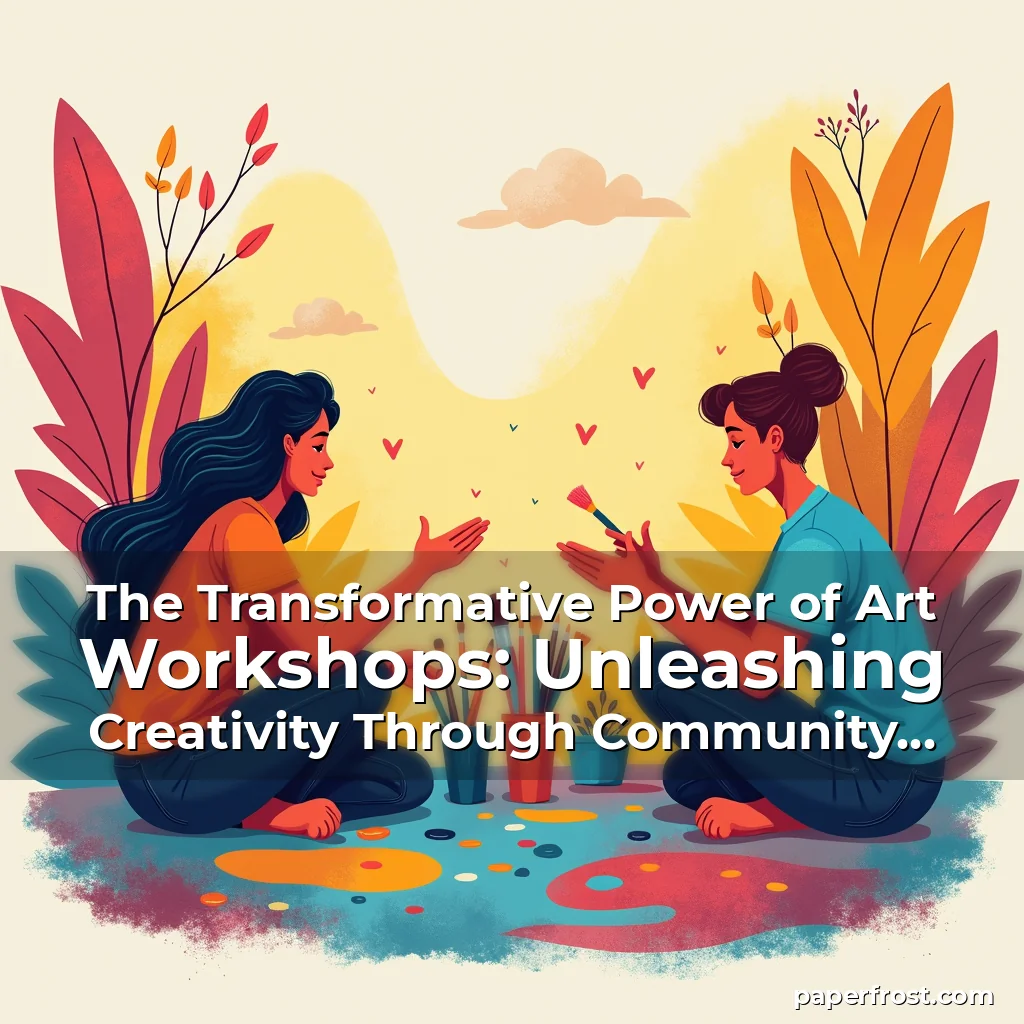
The Transformative Power of Art Workshops: Unleashing Creativity Through Community Engagement
In an era where digital screens dominate our daily lives, art workshops have emerged as vibrant sanctuaries for creative expression and personal growth. These gatherings offer individuals from diverse backgrounds the opportunity to explore their artistic abilities while fostering meaningful connections within a supportive environment.
Whether through painting, sculpture, printmaking, or mixed media techniques, participants engage in hands-on learning experiences that transcend traditional classroom settings. The tactile nature of these activities not only stimulates sensory engagement but also encourages emotional exploration and self-discovery.
Cultivating Creative Confidence Through Structured Learning
Art workshops provide structured environments where learners can develop foundational skills without fear of judgment. Experienced instructors guide participants through step-by-step processes that build confidence in both technical execution and conceptual development.
This approach is particularly beneficial for beginners who may feel intimidated by the prospect of creating original artwork. By focusing on process rather than perfection, workshop facilitators help students understand that creativity thrives in experimentation rather than rigid adherence to conventional standards.
- Foundational Skill Development: From color theory to composition principles, workshops systematically introduce essential artistic concepts
- Perspective Expansion: Exposure to various mediums and styles broadens participants’ understanding of visual language
Participants often report increased self-assurance after completing even basic projects, attributing this transformation to the non-judgmental atmosphere created by skilled educators. This newfound confidence frequently translates into greater willingness to take risks in other areas of life.
Workshop leaders carefully curate sessions to ensure progressive skill acquisition, typically beginning with fundamental exercises before gradually introducing more complex techniques. This scaffolded approach allows learners to build upon previous knowledge while maintaining a sense of accomplishment at each stage.
Fostering Cross-Disciplinary Connections Through Collaborative Spaces
Modern art workshops increasingly emphasize interdisciplinary approaches that bridge traditional fine arts with emerging technologies. Digital fabrication tools, augmented reality installations, and interactive multimedia projects now commonly appear alongside classic drawing and painting classes.
This convergence creates opportunities for unexpected collaborations between artists working in different fields. A ceramicist might find inspiration from a textile artist’s fabric patterns, while a digital designer could incorporate physical sculptures into virtual environments.
Bridging Generational Gaps Through Shared Experiences
A recent study conducted by the International Association of Arts Educators found that intergenerational art programs significantly enhance social cohesion among participants aged 18-65. Workshops pairing young adults with senior citizens reported higher rates of cross-generational communication and mutual appreciation for differing perspectives.
These interactions often lead to innovative fusion of old and new techniques. Elders bring time-honored craftsmanship methods passed down through generations, while younger participants contribute contemporary viewpoints shaped by modern technological advancements.
Such exchanges create dynamic learning ecosystems where knowledge flows bidirectionally. Participants gain fresh insights while simultaneously preserving cultural heritage through shared artistic practices.
Navigating the Evolving Landscape of Contemporary Art Education
The rise of online platforms has fundamentally transformed how people access art education. Virtual workshops now enable global participation, connecting students across continents who share common interests yet possess distinct cultural contexts.
Digital tools such as Zoom, Adobe Fresco, and Procreate allow remote collaboration on real-time projects. However, this shift raises questions about the role of physical materials and tactile experiences in authentic artistic development.
While online formats offer unparalleled accessibility, many educators argue that face-to-face interaction remains crucial for developing nuanced artistic sensibilities. The immediacy of instructor feedback during in-person demonstrations helps students refine techniques more effectively than pre-recorded tutorials ever could.
Hybrid models are gaining traction, combining the best aspects of both worlds. Instructors conduct live demonstrations virtually while providing kits containing necessary physical materials for home-based practice. This blended approach maintains the benefits of direct supervision while respecting individual schedules and locations.
Creating Inclusive Environments That Embrace Diverse Abilities
Accessible art workshops prioritize inclusivity by accommodating participants with varying levels of ability. Adaptive tools and modified techniques ensure that everyone can engage meaningfully regardless of physical limitations.
For example, artists with limited hand mobility might use foot-operated brushes or voice-controlled software to create intricate designs. Visual impairment accommodations include textured canvases and audio descriptions of artworks under creation.
Facilitators receive specialized training to address diverse needs, ensuring that instruction is delivered in ways that respect individual capabilities while encouraging maximal participation.
Such inclusive spaces foster a profound sense of belonging. When participants know they’re valued despite differences, they become more receptive to creative risk-taking and collaborative ventures.
Building Sustainable Communities Around Shared Interests
Successful art workshops cultivate enduring communities beyond single-session events. Regular meetups, group exhibitions, and ongoing mentorship programs create continuity that sustains participant engagement over extended periods.
Many studios maintain active memberships where attendees can reserve time slots for independent work. This flexibility allows artists to continue refining their craft outside scheduled class times while benefiting from studio resources.
Community-driven initiatives often extend beyond artistic production itself. Group critiques, open studio nights, and thematic challenges encourage continuous dialogue and collective growth.
Strong networks formed through consistent participation lead to professional opportunities such as exhibition invitations, commission requests, and collaborative projects with fellow members.
Measuring Impact: Quantifying the Benefits of Artistic Engagement
Research consistently demonstrates the cognitive and emotional benefits associated with regular artistic activity. Brain imaging studies show enhanced neural connectivity in regions responsible for problem-solving and emotional regulation among frequent art practitioners.
Educational institutions incorporating arts programming report improved student performance metrics across STEM subjects. This phenomenon suggests strong correlations between creative thinking and analytical reasoning capacities.
Mental health professionals increasingly recommend art therapy as part of treatment plans for anxiety disorders and depression. Expressive outlets provided by workshops facilitate emotional release and self-reflection processes.
Societal impact assessments reveal reduced recidivism rates among incarcerated populations participating in prison art programs. Creative expression appears to play a critical role in rehabilitation outcomes.
Cultivating Leadership Through Mentorship Opportunities
Experienced artists benefit from mentoring roles that deepen their own understanding while guiding newcomers. This reciprocal relationship enhances leadership qualities and reinforces core competencies through teaching.
Mentorship programs often pair established creators with emerging talents, facilitating knowledge transfer across generations. These partnerships generate rich dialogues that challenge assumptions and stimulate innovation.
Teaching requires articulating complex ideas clearly, which strengthens mentors’ ability to explain abstract concepts effectively. This skill proves invaluable when communicating artistic visions to broader audiences.
As mentees achieve milestones, mentors witness tangible evidence of their instructional effectiveness. Celebrating students’ successes becomes a powerful motivator for continued involvement in educational pursuits.
Embracing Cultural Diversity in Global Art Practices
International art workshops serve as melting pots where traditions intersect and evolve. Artists from different cultures exchange techniques, symbols, and storytelling methodologies that enrich collective creative vocabularies.
Linguistic barriers dissolve through visual languages that transcend spoken word. Color symbolism varies widely across societies, making cross-cultural workshops fertile ground for exploring universal themes through localized expressions.
Participation in multicultural programs fosters global citizenship awareness. Understanding diverse artistic heritages promotes empathy and appreciation for human variability.
Curatorial decisions regarding exhibited works reflect this diversity, showcasing pieces that represent varied cultural narratives rather than adhering to homogenized aesthetic norms.
Environmental Stewardship in Modern Art Practice
Sustainable art workshops promote eco-conscious practices by emphasizing recycled materials and environmentally friendly techniques. This approach aligns with growing public concern about climate change and resource depletion.
Participants learn to repurpose discarded objects into compelling artworks, transforming waste into value. Upcycling projects demonstrate creative solutions to environmental challenges while producing aesthetically pleasing results.
Non-toxic paint formulations and biodegradable mediums reduce ecological footprints without compromising artistic quality. Studios adopting green policies set benchmarks for industry-wide sustainability efforts.
Green certifications for eco-friendly studios attract socially conscious patrons seeking ethical consumption options. These initiatives support local economies while contributing to planetary well-being.
Technology Integration: Enhancing Traditional Techniques
Blending analog and digital methods expands creative possibilities. Laser cutters, CNC machines, and 3D printers complement traditional sculptural practices, enabling precise execution of complex forms.
Augmented reality applications allow viewers to experience layered dimensions within static artworks, creating immersive encounters that defy conventional spatial constraints.
Virtual reality environments simulate endless creative spaces free from material limitations, offering boundless potential for experimental design.
However, technology integration must remain balanced with core artistic values. Tools should enhance rather than replace the expressive essence of manual craftsmanship.
Redefining Success Metrics Beyond Commercial Outcomes
Art workshops redefine success through intrinsic measures rather than market-driven indicators. Personal fulfillment, creative breakthroughs, and communal bonds become primary evaluation criteria.
This paradigm shift liberates participants from external pressures to produce commercially viable products. Focus shifts toward exploratory processes that prioritize growth over output quantity.
Metrics such as increased self-awareness, stronger interpersonal relationships, and heightened emotional intelligence become measurable outcomes of sustained engagement.
Recognizing these intangible achievements validates the transformative power of artistic pursuit, affirming its value beyond financial returns.
Conclusion
Art workshops stand as vital conduits for personal enrichment, cultural exchange, and sustainable innovation. Their multifaceted impacts resonate far beyond the confines of any particular medium or technique.
By embracing both traditional wisdom and contemporary advancements, these spaces cultivate resilient communities grounded in shared curiosity and mutual respect. As we navigate an evolving world, the significance of such creative havens continues to grow.

news is a contributor at PaperFrost. We are committed to providing well-researched, accurate, and valuable content to our readers.